

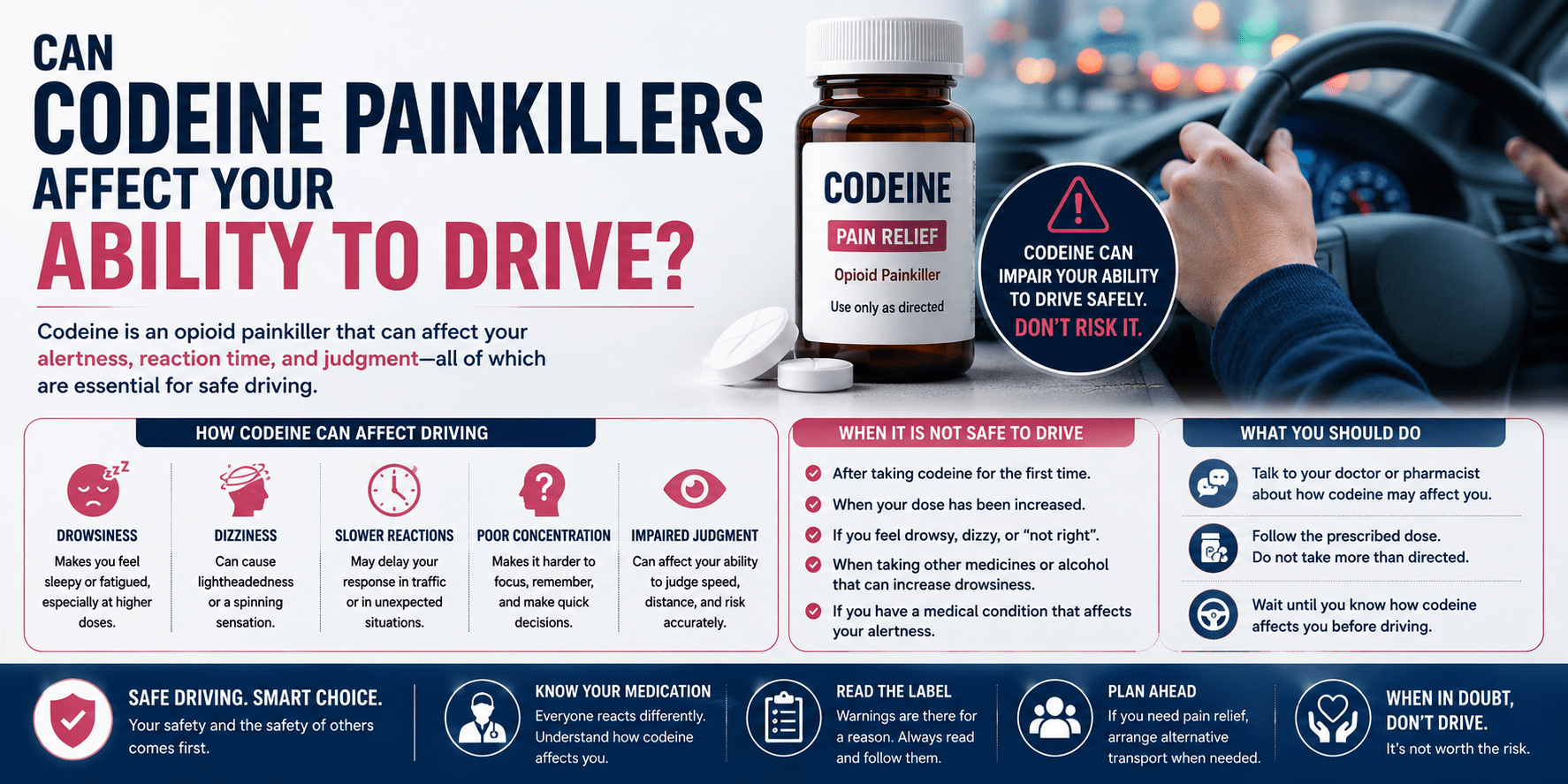
Yes. Codeine painkillers can affect your ability to drive safely. Codeine is an opioid medicine used primarily for pain relief and, in some formulations and clinical situations, to suppress coughing. It can cause sleepiness, dizziness, reduced concentration, slower reactions, and impaired coordination—all of which can make driving dangerous.
The risk can be particularly important when you have just started codeine, your dose has been increased, or you are taking other medicines or alcohol that cause drowsiness.
Featured-snippet answer: Codeine can impair the mental and physical abilities needed for safe driving. If codeine makes you sleepy, dizzy, confused, slow to react, or unable to concentrate, do not drive or operate machinery until these effects have completely worn off.
What Is Codeine Used For?
Codeine is an opioid medicine that can be prescribed for pain. Depending on the formulation and medical indication, codeine can also be used to help control a cough.
For pain, codeine may be used when other painkillers have not provided sufficient relief. It is available by itself or combined with medicines such as acetaminophen/paracetamol.
Because codeine acts on the central nervous system, it can affect alertness and coordination. This is one reason driving precautions are important.
How Can Codeine Affect Driving?
Codeine may affect several abilities that are essential for driving, including:
- Alertness: You may feel unusually sleepy or tired.
- Concentration: You may find it harder to maintain attention.
- Reaction time: Your responses to sudden hazards may become slower.
- Coordination: Your ability to control the vehicle precisely may be affected.
- Judgment: Drowsiness or mental impairment can interfere with decision-making.
- Vision and balance: Some people may experience dizziness or other effects that make vehicle control more difficult.
The official prescribing information for codeine sulfate specifically warns that codeine can impair the mental and physical abilities required for potentially hazardous activities such as driving or operating machinery.
Why Does Codeine Cause Drowsiness?
Codeine is an opioid. Its effects on the central nervous system can produce sleepiness and reduced alertness.
People can respond differently to codeine. Factors such as the dose, previous exposure to opioids, other medicines, alcohol, and individual metabolism can influence how strongly someone is affected.
Codeine is also metabolized partly into morphine. Some people metabolize codeine more rapidly than others, potentially producing higher-than-expected morphine exposure and more pronounced opioid effects.
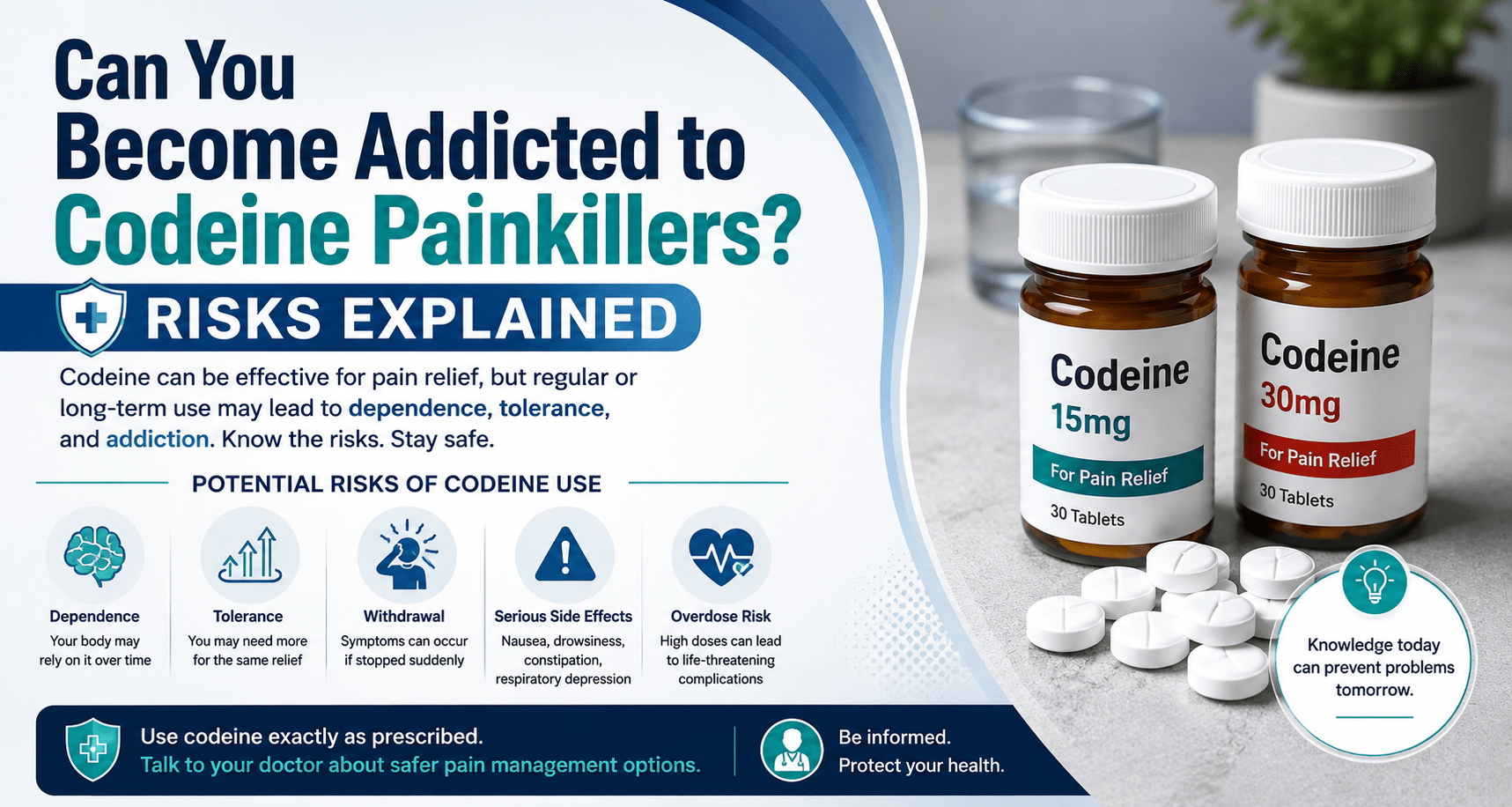
Codeine Phosphate 15 mg vs 30 mg: What Is the Difference?
The simplest difference is the amount of codeine phosphate in each tablet.
| Feature | Codeine phosphate 15 mg | Codeine phosphate 30 mg |
|---|---|---|
| Codeine per tablet | 15 mg | 30 mg |
| Relative amount | Lower strength | Twice the codeine of a 15 mg tablet |
| Potential opioid effects | Can cause drowsiness and impairment | May produce stronger effects in some people |
| Driving considerations | May impair driving | May have a greater potential for impairment, depending on the individual |
A 30 mg tablet contains twice as much codeine phosphate as a 15 mg tablet. Current U.S. DailyMed labeling lists codeine sulfate tablets in 15 mg and 30 mg strengths, while combination products can contain 15 mg or 30 mg of codeine phosphate.
However, milligram strength alone does not tell you whether you are safe to drive. Someone taking 15 mg may become significantly drowsy, while another person who has developed tolerance may experience fewer noticeable effects. Your prescribed dose should not be increased or decreased simply to make driving possible.
Can You Drive After Taking Codeine 15 mg?
Not necessarily.
Even a lower-strength dose such as 15 mg can cause sleepiness, dizziness or impaired concentration. If you experience these effects, you should not drive.
The NHS advises that people who feel sleepy or tired after taking codeine should not drive, cycle, or use machinery until they no longer have those symptoms.
Can You Drive After Taking Codeine 30 mg?
A 30 mg dose contains twice the amount of codeine found in a 15 mg tablet, so it may produce stronger opioid effects in some people. However, there is no universal rule that says a person is safe to drive after a particular number of hours.
Your response depends on factors such as:
- Whether you have recently started taking codeine
- Your prescribed dose
- Whether your dose was recently increased
- Your individual sensitivity to opioids
- Other medicines you take
- Whether you have consumed alcohol
- Whether you are tired or unwell
The safest approach is to avoid driving if you feel impaired in any way and follow the instructions provided by your prescriber and medicine leaflet.
What Happens If You Mix Codeine With Alcohol?
Combining codeine with alcohol can increase central nervous system depression. This can result in greater drowsiness and impairment and may increase the risk of serious opioid-related effects.
Official prescribing information warns about combining codeine with alcohol and other central nervous system depressants because their effects can be additive.
Do not use alcohol as a way to relax while taking codeine, particularly if you need to drive.
What Other Medicines Can Increase Driving Risk?
Codeine can interact with other substances that cause sedation. Examples include some:
- Opioid medicines
- Sleeping medicines
- Sedatives
- Certain anti-anxiety medicines
- Other central nervous system depressants
Combining these substances can increase impairment.
If you take multiple medicines, ask a doctor or pharmacist whether they could affect your ability to drive.
How Long Should You Wait Before Driving After Codeine?
There is no single waiting period that is safe for everyone.
Codeine affects people differently, and the appropriate advice can depend on the formulation, dose, frequency of use, other medicines and your individual response.
Instead of relying only on a specific number of hours, pay attention to whether you have symptoms such as:
- Sleepiness
- Dizziness
- Confusion
- Poor concentration
- Blurred vision
- Slower reactions
- Poor coordination
If any of these occur, do not drive.
For people who have been prescribed codeine regularly, a healthcare professional can provide individualized advice about driving.
What Should You Do If Codeine Makes You Sleepy?
If you become sleepy after taking codeine:
- Do not drive.
- Do not operate machinery or perform other hazardous activities.
- Avoid alcohol and other substances that may increase drowsiness.
- Take codeine only as prescribed.
- Speak with your doctor or pharmacist if the drowsiness is persistent or interfering with normal activities.
Do not stop long-term codeine treatment abruptly without medical advice, because physical dependence can develop and sudden discontinuation can cause withdrawal symptoms.
Does Codeine Always Affect Driving Ability?
No. Not everyone experiences the same degree of impairment.
Some people may experience noticeable sleepiness or dizziness, while others may have few obvious symptoms. Nevertheless, codeine has the potential to impair the mental and physical abilities needed for driving.
Importantly, feeling normal does not mean you should automatically assume that you are safe to drive. Follow the specific advice provided with your prescription and by your healthcare professional, particularly when starting treatment or changing doses.
What If You Accidentally Take Too Much Codeine?
Taking more codeine than prescribed can be dangerous. Excessive opioid effects may cause severe sleepiness, confusion, slow or difficult breathing, or loss of consciousness. Certain people can also have unusually high morphine exposure because of differences in how their bodies metabolize codeine.
If you suspect an overdose or someone is difficult to wake, has very slow or abnormal breathing, or becomes unconscious, seek emergency medical help immediately.
Do not drive yourself to seek emergency care if you may be impaired.
Codeine and Driving: Key Takeaways
Codeine can be effective for pain relief and is also used in some situations for cough, but it can affect the brain and nervous system.
The most important points are:
- Codeine can impair driving ability.
- Sleepiness, dizziness, poor concentration and slower reactions are warning signs.
- Codeine phosphate 30 mg contains twice as much codeine as codeine phosphate 15 mg.
- A higher dose may increase the likelihood or intensity of opioid effects in some people.
- Alcohol and other sedating medicines can increase impairment.
- There is no universal number of hours after taking codeine that guarantees safe driving.
- If you feel impaired, do not drive.
- Follow your prescription instructions and ask a doctor or pharmacist if you are unsure.
Frequently Asked Questions
Can codeine painkillers affect your ability to drive?
Yes. Codeine can cause sleepiness, dizziness, impaired concentration, slower reactions and reduced coordination, all of which can make driving unsafe.
Can I drive after taking codeine 15 mg?
Only if you have been advised that driving is appropriate and you are not experiencing impairment. If 15 mg makes you sleepy, dizzy or less alert, do not drive.
Can I drive after taking codeine 30 mg?
A 30 mg tablet contains twice as much codeine as a 15 mg tablet and may cause stronger effects in some people. Do not drive if you experience impairment.
Is codeine 30 mg stronger than codeine 15 mg?
Yes. A 30 mg codeine tablet contains twice the amount of codeine as a 15 mg tablet.
How long after taking codeine can I drive?
There is no universal safe waiting period. Individual response varies. Do not drive while experiencing sleepiness, dizziness, impaired concentration or other effects that could affect safe vehicle control.
Does codeine make you sleepy?
Yes. Sleepiness and tiredness are recognized side effects of codeine.
Can you drink alcohol while taking codeine?
Alcohol can increase central nervous system depression and impairment when combined with codeine. Avoid combining them unless a healthcare professional specifically advises otherwise.
Is codeine used for pain or cough?
Codeine is an opioid used for pain relief and can also be used for cough in certain formulations and clinical circumstances.
Can you operate machinery after taking codeine?
Codeine may impair the mental and physical abilities required to operate machinery safely. If you are impaired, do not operate machinery.