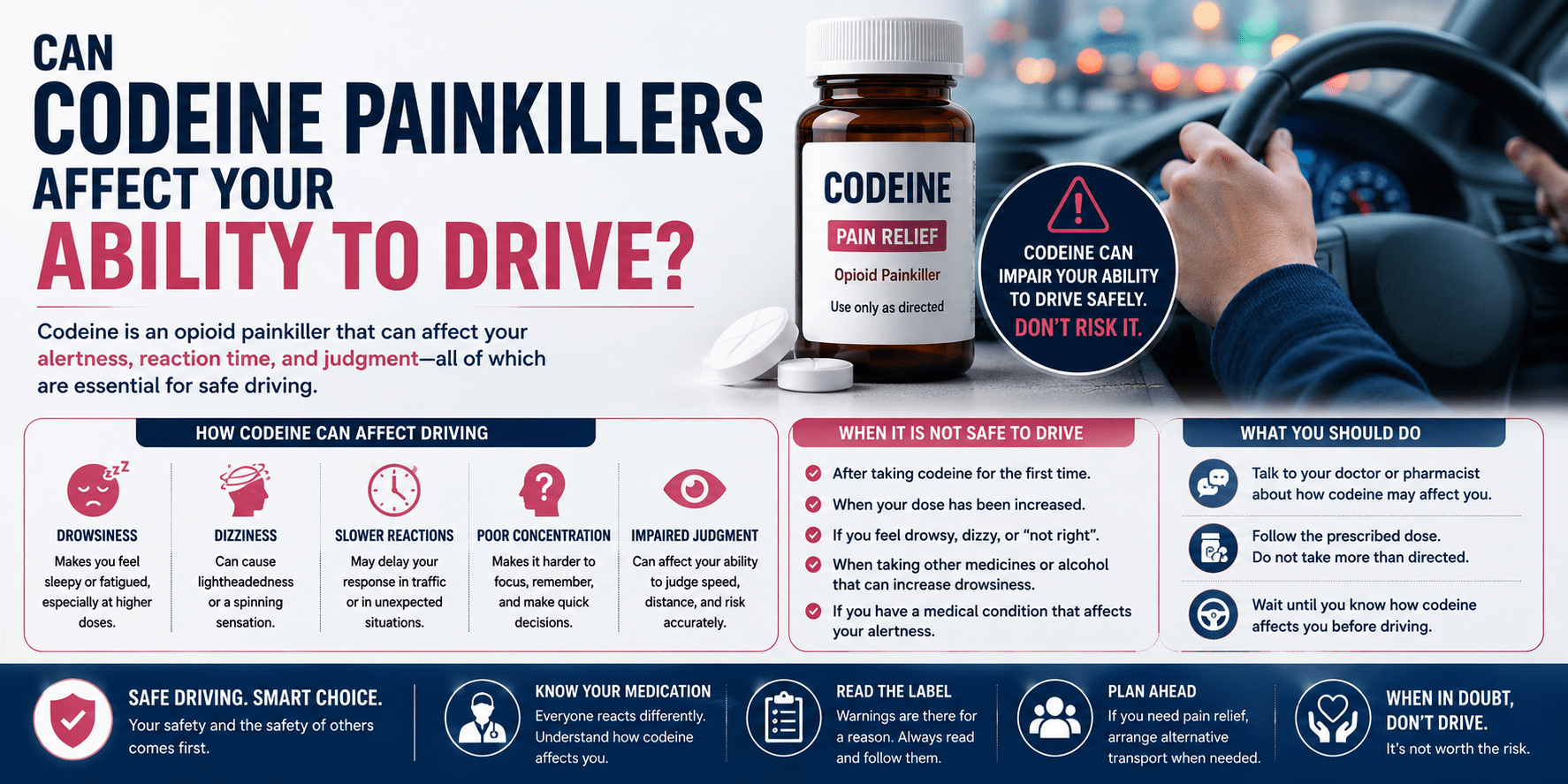


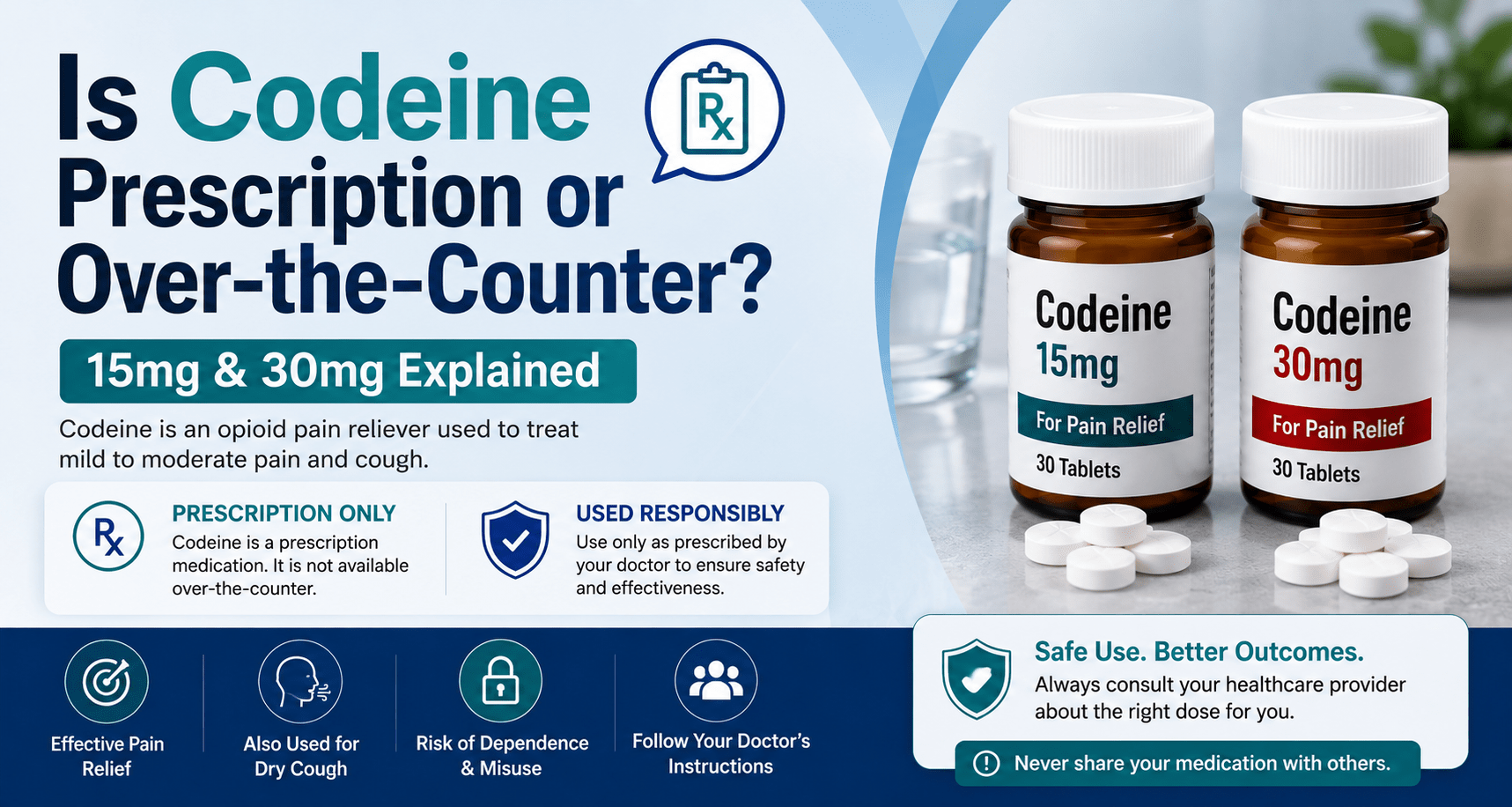
Codeine is generally a prescription-only opioid in the United States, but its legal classification can depend on the exact formulation and jurisdiction. Codeine is used primarily for pain relief and, in some formulations, to suppress coughing. Because it can cause misuse, dependence, respiratory depression, overdose, and other serious effects, products containing codeine are subject to significant regulatory controls.
For people researching codeine phosphate 15mg or codeine phosphate 30mg, it is especially important to distinguish between the amount of codeine in a tablet and the legal status of the complete medication.
Is Codeine Prescription or OTC?
In the U.S., codeine pain medicines such as codeine phosphate tablets and acetaminophen/codeine tablets are prescription medications, not ordinary OTC pain relievers. FDA information identifies codeine as an opioid used for mild to moderately severe pain and notes that it is commonly combined with other medicines such as acetaminophen.
There is, however, an important distinction between prescription codeine products and certain historical or jurisdiction-specific cough-and-cold formulations. FDA has noted that some codeine-containing cough medicines have been available OTC in a small number of states, while other codeine cough medicines require a prescription. Therefore, “codeine is prescription or OTC” cannot always be answered solely by looking at the word codeine on a label. The product’s formulation and applicable state and federal rules matter.
What about Codeine Phosphate 15mg?
Codeine phosphate 15mg refers to the amount of codeine phosphate contained in a medication. A common example is an acetaminophen and codeine phosphate tablet containing 300 mg acetaminophen plus 15 mg codeine phosphate. DailyMed labeling identifies this as a specific prescription formulation.
The “15mg” does not mean the medicine is an OTC product. It describes the strength of the codeine component.
What about Codeine Phosphate 30mg?
Codeine phosphate 30mg is another commonly marketed strength. For example, some acetaminophen/codeine tablets contain 300 mg acetaminophen and 30 mg codeine phosphate per tablet.
Again, the 30mg strength does not make the medication OTC. The complete product remains subject to prescription and controlled-substance regulations applicable to its formulation.
Why Is Codeine Controlled?
Codeine belongs to the opioid class of medicines. It acts on opioid receptors and can produce pain-relieving effects. The body also converts some codeine into morphine, and people can respond differently depending on how quickly they metabolize the drug.
Because of these properties, codeine can cause:
- Drowsiness and dizziness
- Constipation and nausea
- Physical dependence and withdrawal
- Misuse and addiction
- Dangerous sedation
- Slowed or difficult breathing
- Overdose, particularly when combined with other central nervous system depressants
FDA-approved opioid labeling contains prominent warnings concerning addiction, abuse, misuse, respiratory depression, and overdose.
Is Codeine Phosphate 15mg Different From 30mg?
The primary difference is the amount of codeine phosphate per unit. A 30mg tablet contains twice as much codeine phosphate as a 15mg tablet when comparing otherwise equivalent formulations.
However, this does not mean someone should automatically take more or less based on the strength alone. Prescription labeling emphasizes individualized dosing and the lowest effective dose appropriate for the patient.
It is also important to check the other ingredients. For example, an acetaminophen/codeine tablet containing 15mg or 30mg of codeine also contains acetaminophen. Taking multiple medicines containing acetaminophen can unintentionally increase total acetaminophen exposure.
Does Codeine Require a Prescription Everywhere?
No single worldwide rule determines whether codeine is prescription-only. Drug laws differ between countries and can also vary by U.S. state and formulation.
In the United States, the DEA classifies certain codeine formulations as controlled substances. For example, the DEA’s controlled-substance information lists codeine combination products containing no more than 90mg of codeine per dosage unit under Schedule III.
This is why consumers should not assume that a codeine product advertised online or sold in another country has the same legal status in the United States.
Frequently Asked Questions
Is codeine an over-the-counter medicine?
Generally, no. Codeine-containing pain medicines such as codeine phosphate and acetaminophen/codeine tablets are prescription medicines in the United States. Certain codeine-containing cough products have had different regulatory treatment in some jurisdictions, so the exact product and location matter.
Is codeine phosphate 15mg prescription-only?
Yes, when referring to FDA-approved codeine phosphate/acetaminophen prescription tablets marketed in the U.S. A 15mg strength describes the amount of codeine phosphate in the tablet; it does not make the product OTC.
Is codeine phosphate 30mg available over the counter?
Codeine phosphate 30mg pain-relief tablets are prescription medications in the U.S. Some formulations contain 300mg acetaminophen alongside 30mg codeine phosphate.
Can codeine be addictive?
Yes. Codeine is an opioid and can lead to misuse, physical dependence, and addiction. The risk can occur even when an opioid is taken as prescribed, which is why patients should follow their prescriber’s directions and discuss concerns about dependence or side effects with a healthcare professional.
Why can’t I simply buy codeine like ibuprofen?
Unlike common OTC pain relievers, codeine has opioid effects and carries risks including respiratory depression, misuse, addiction, and overdose. These risks are a major reason codeine pain medicines are regulated rather than treated like ordinary OTC analgesics.
Key Takeaway
Codeine is generally a prescription opioid in the United States, particularly when used for pain. Codeine phosphate 15mg and codeine phosphate 30mg are strengths found in prescription formulations, including acetaminophen/codeine tablets. The strength of the tablet does not determine whether it is OTC; the complete formulation and applicable laws determine its regulatory status.
Anyone considering codeine should use it only as directed by a qualified healthcare professional and should avoid combining it with alcohol or other medicines that can cause dangerous sedation unless specifically instructed by a healthcare professional.