

Codeine (3-methylmorphine) is an opioid analgesic and antitussive agent derived from the opium poppy (Papaver somniferum) or synthesized from morphine. It is widely prescribed for the management of mild-to-moderate pain and the suppression of non-productive coughs.
Understanding codeine’s pharmacokinetics, dosing standards (such as codeine 15mg and codeine 30mg formulations), onset of action, and central nervous system (CNS) side effects like sedation is essential for safe clinical application and patient monitoring.
1. What Drug is Codeine? Pharmacological Profile and Metabolism
Codeine is a prodrug that relies on metabolic conversion within the liver to exert its primary analgesic effects.
- Drug Class: Opioid Agonist / Analgesic / Antitussive
- Chemical Name: 3-O-methylmorphine
- Mechanism of Action: Codeine binds weakly to $\mu$-opioid receptors in the central nervous system. Its principal analgesic activity stems from its conversion into morphine by the hepatic cytochrome P450 enzyme CYP2D6.
- Genetic Polymorphism (CYP2D6):
- Poor Metabolizers: Individuals with reduced CYP2D6 activity experience diminished or absent pain relief due to low morphine conversion.
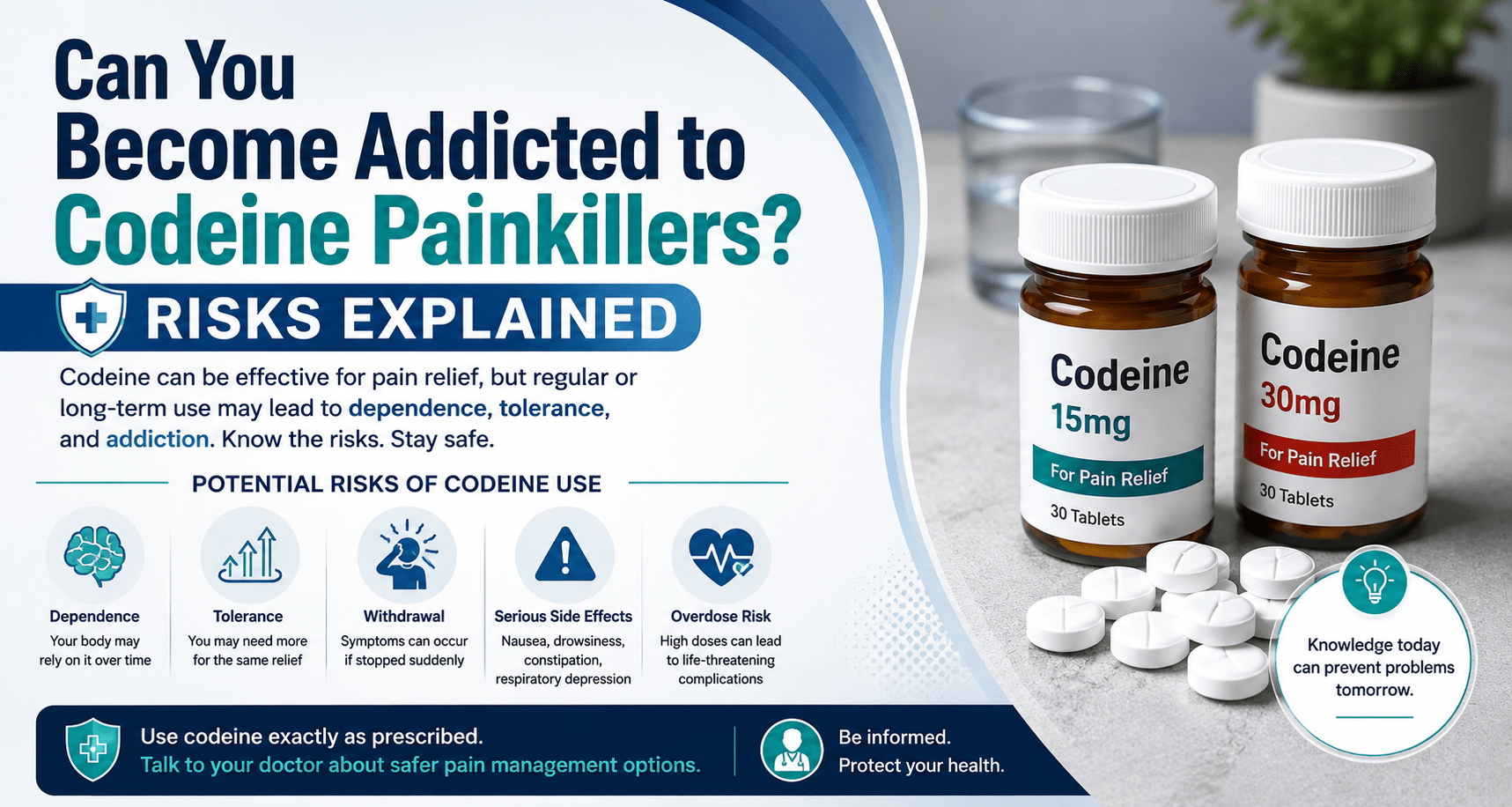
- Ultra-Rapid Metabolizers: Individuals with high CYP2D6 activity convert codeine into morphine rapidly, significantly increasing the risk of toxicity, respiratory depression, and overdose—even at standard therapeutic doses.
2. Dosing Standards: Codeine 15mg vs. Codeine 30mg
Codeine is typically administered orally as codeine phosphate or codeine sulfate. It is frequently formulated as a single agent or combined with non-opioid analgesics (e.g., paracetamol/acetaminophen or ibuprofen) to produce synergistic pain relief.
| Parameter | Codeine 15mg | Codeine 30mg |
| Primary Clinical Indication | Mild pain; antitussive (cough suppression); initial dose titration for sensitive patients | Moderate pain management; standard adult therapeutic starting dose |
| Common Formulations | Low-dose oral tablets; combination cough syrups; mild co-formulations | Standalone tablets; Co-codamol (30/500 mg paracetamol co-formulation) |
| Typical Adult Frequency | Every 4 to 6 hours as needed (Max 240 mg/day) | Every 4 to 6 hours as needed (Max 240 mg/day) |
| Relative Analgesic Potency | Equivalent to lower-tier non-opioid responses; mild $\mu$-receptor engagement | Standard clinical starting threshold for noticeable central pain modulation |
3. Onset of Action: How Long Does Codeine Take to Work?
The pharmacokinetic profile of orally administered codeine determines its therapeutic timeline:
+-----------------------------------------------------------------------------------+
|                        CODEINE ORAL PHARMACOKINETIC TIMELINE                      |
+-----------------------------------------------------------------------------------+
| 1. ONSET OF ACTION    ──► 30 to 60 minutes post-ingestion                       |
| 2. PEAK PLASMA LEVEL  ──► 1 to 2 hours (Maximum therapeutic effect)               |
| 3. DURATION OF ACTION ──► 4 to 6 hours                                            |
| 4. ELIMINATION HALF-LIFE (t½) ──► 2.5 to 3 hours                                  |
+-----------------------------------------------------------------------------------+
- Absorption: Rapidly absorbed from the gastrointestinal tract following oral administration.
- Bioavailability: Approximately 40% to 70%, limited by first-pass hepatic metabolism.
- Food Impact: Taking codeine with food may slightly delay the time to peak plasma concentration ($T_{\max}$), but it does not significantly reduce overall bioavailability.
4. Effects of Codeine: Therapeutic and Adverse Dynamics
Codeine acts directly on the central nervous system and smooth muscle structures throughout the body, producing both intended therapeutic outcomes and systemic side effects.
A. Therapeutic Effects
- Analgesia: Alters perception and emotional response to pain by inhibiting ascending pain pathways in the spinal cord and brainstem.
- Antitussive Action: Suppresses the cough reflex by direct central action on the cough center in the medulla oblongata.
- Antidiarrheal Action: Decreases gastrointestinal motility and increases smooth muscle tone in the digestive tract.
B. Common Systemic Side Effects
| Organ System | Common Manifestations |
| Central Nervous System | Drowsiness, sedation, dizziness, lightheadedness, mild euphoria |
| Gastrointestinal System | Constipation, nausea, vomiting, xerostomia (dry mouth) |
| Respiratory System | Dose-dependent respiratory depression (slowed or shallow breathing) |
| Cardiovascular System | Bradycardia, orthostatic hypotension, peripheral vasodilation |
5. Can Codeine Make You Sleepy? Sedation and CNS Modulation
Yes, codeine frequently causes sleepiness, drowsiness, and sedation.
Mechanics of Codeine-Induced Sedation
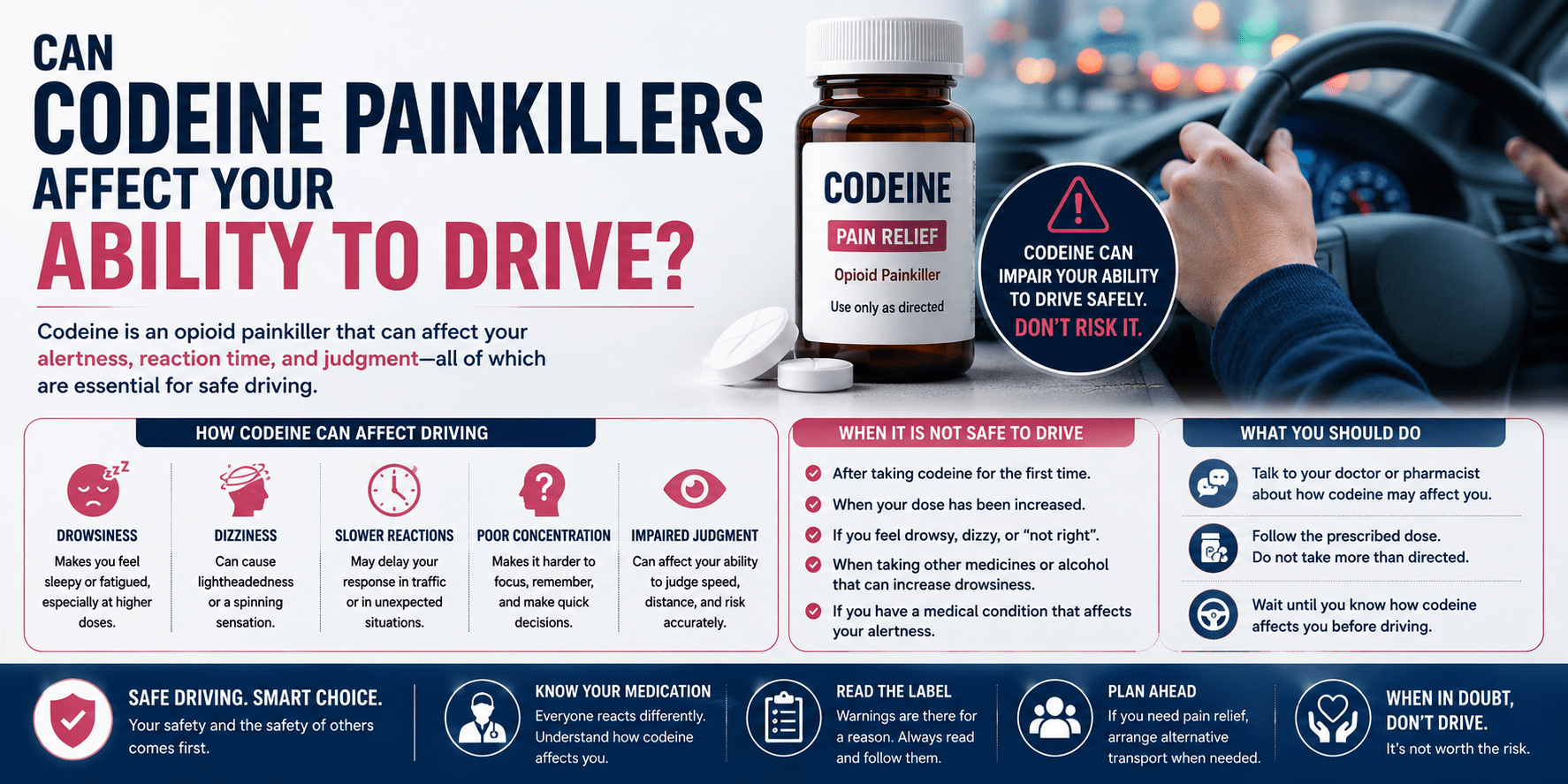
- CNS Depression: As an opioid agonist, codeine suppresses neuronal excitability across the central nervous system, particularly in regions regulating wakefulness and arousal.
- Interactive Risks: Sedative effects are significantly amplified when codeine is co-administered with other CNS depressants, including alcohol, benzodiazepines, barbiturates, or sedating antihistamines.
- Safety Precautions: Patients should avoid driving, operating heavy machinery, or performing hazardous tasks until their individual response to codeine is established.
Key Takeaways & Clinical Reference
- Prodrug Mechanism: Codeine requires conversion to morphine via hepatic CYP2D6 enzymes to exert full analgesic efficacy.
- Onset Window: Oral codeine takes 30 to 60 minutes to start working, reaching peak effect within 1 to 2 hours.
- Common Dosages: Formulations typically start at 15mg (mild pain/cough) and 30mg (moderate pain management).
- Primary Side Effects: Sedation (“sleepiness”), constipation, nausea, and dose-dependent respiratory depression are hallmark opioid effects.
Emergency Response & Clinical Safety Note
Opioid toxicity can result in life-threatening respiratory failure, profound sedation, and coma. Suspected overdoses require immediate emergency intervention (112 in the EU, 999 in the UK, 911 in North America). Naloxone is a specific opioid antagonist that rapidly reverses respiratory depression and CNS sedation caused by codeine and other opioids. Multiple doses may be needed depending on the severity of exposure.