

Ibuprofen And Codeine
The co-administration of ibuprofen and codeine represents a multimodal analgesic strategy designed to manage moderate to severe acute pain. By targeting distinct biochemical pathways, the combination offers enhanced pain relief through additive therapeutic effects while minimizing single-drug dose-dependent toxicity.
Pharmacological Mechanisms of Action
1. Ibuprofen (Non-Steroidal Anti-Inflammatory Drug – NSAID)
- Target: Cyclooxygenase enzymes (COX-1 and COX-2).
- Mechanism: Inhibits the conversion of arachidonic acid into pro-inflammatory prostaglandins.
- Primary Effect: Reduces peripheral inflammation, tissue swelling, and localized pain sensitization.
2. Codeine (Opioid Agonist)
- Target: Central $\mu$-opioid receptors ($\mu$-OR).
- Mechanism: Acts as a prodrug converted into morphine via the hepatic CYP2D6 enzyme.
- Primary Effect: Alters pain perception and emotional response to pain within the central nervous system (CNS).
Clinical Indications and Efficacy
- Indications: Short-term management of acute moderate pain (e.g., post-surgical pain, dental extractions, musculoskeletal injury) when single-agent analgesics are inadequate.
- Multimodal Advantage: Combining peripheral anti-inflammatory action with central opioid analgesia produces superior efficacy compared to either drug administered alone at equivalent doses.
What does ibuprofen codeine do?
Ibuprofen and codeine work through two distinctly different mechanisms in the body to manage pain:
- Ibuprofen: A non-steroidal anti-inflammatory drug (NSAID) that acts locally. It blocks cyclooxygenase (COX) enzymes, reducing the production of prostaglandins that cause inflammation, swelling, and localized pain.
- Codeine: An opioid analgesic (narcotic) that acts on the central nervous system. It binds to mu-opioid receptors in the brain and spinal cord to alter the perception of pain and reduce the emotional response to discomfort.
When combined, they provide dual-action pain relief. Ibuprofen targets tissue inflammation at the source, while codeine dampens the pain signals sent to the brain.
Can you take ibuprofen and codeine together?
Yes, you can take ibuprofen and codeine together. Because they belong to different drug classes and work via separate chemical pathways, combining them produces an additive effect that manages moderate pain more effectively than either medication taken alone.
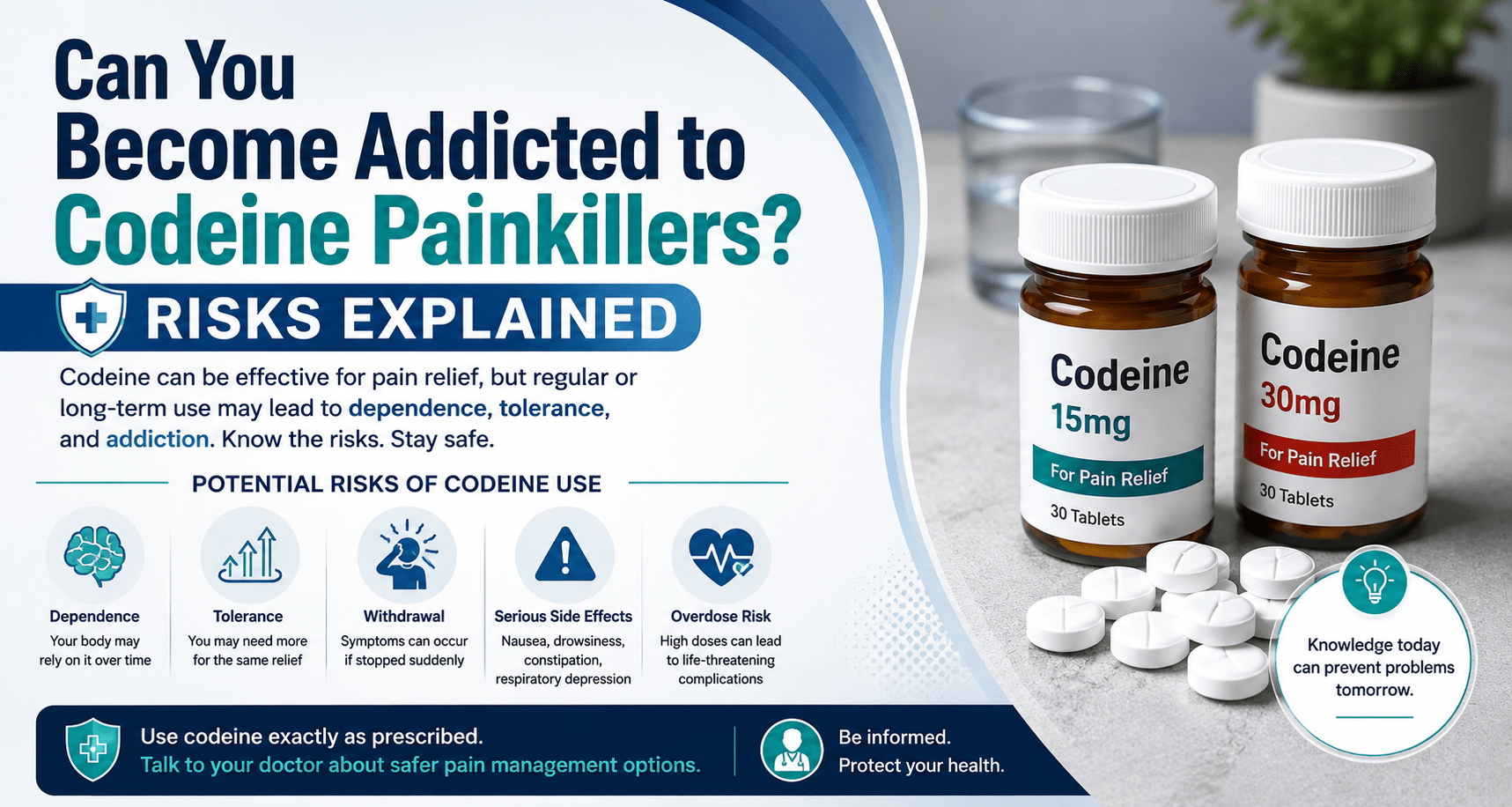
However, combined use should be restricted to short-term treatment (typically 3 days maximum) under medical or pharmaceutical guidance due to the risk of codeine dependence and side effects like drowsiness or gastrointestinal upset.
What is ibuprofen with codeine called?
When manufactured together as a single combination tablet, the medication is available under several brand and generic names:
| Category | Product / Name | Standard Dosing Ratio |
| Common Brand Name | Nurofen Plus | 200 mg Ibuprofen / 12.8 mg Codeine Phosphate |
| Generic Names | Ibuprofen / Codeine or Ibuprofen Plus Codeine | 200 mg Ibuprofen / 12.8 mg Codeine Phosphate |
Note: Availability and brand names vary by country, and high-dose formulations require a prescription.
Is codeine a stronger painkiller than ibuprofen?
Yes, codeine is classified as a stronger painkiller than standard doses of ibuprofen.
- Efficacy & Class: Ibuprofen is an over-the-counter non-opioid suited for mild-to-moderate inflammatory pain. Codeine is a central-acting opioid intended for moderate-to-severe pain when first-line analgesics fail.
- Potency Profile: Codeine is a prodrug converted into morphine by the liver enzyme CYP2D6. Because opioids directly alter central pain perception, codeine provides a higher ceiling of pain relief than standard NSAIDs, but carries greater risks, including respiratory depression, tolerance, and addiction.
Key Summary & Knowledge Retrieval
The ibuprofen-codeine combination provides powerful dual-action analgesia. However, strict adherence to short-term dosage limits is essential to prevent serious gastrointestinal, renal, and addictive complications.
- Combination Safety: Safe for short-term use (≤3 days).
- Primary Brand: Nurofen Plus.
- Drug Classes: NSAID (Ibuprofen) + Opioid Analgesic (Codeine).
- Primary Indication: Short-term management of acute, moderate pain where single-agent analgesics are insufficient.