

Is Codeine An Opioid?
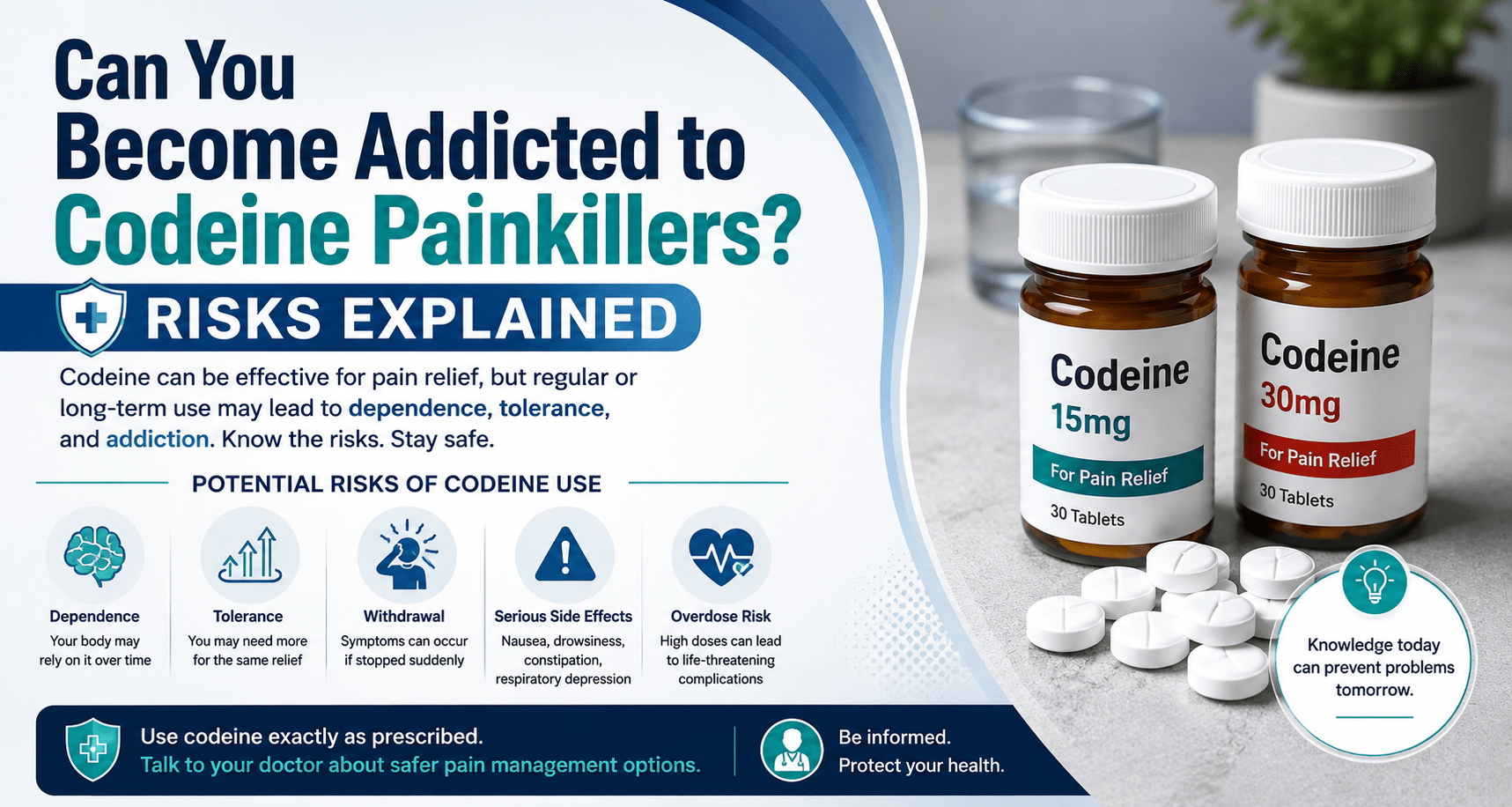
Yes, codeine is an opioid painkiller derived from the opium poppy. Discover how codeine works, its uses, medical risks, addiction potential, and side effects. Codeine is a naturally occurring opioid analgesic and anti-tussive (cough suppressant) derived from the opium poppy (Papaver somniferum). It belongs to the broader class of opioid medications, which act on the central nervous system to relieve pain and suppress the cough reflex.
Because codeine is one of the most widely used prescription and over-the-counter medications globally, understanding its classification, potency, and relation to other opioids is critical for clinical awareness and patient safety.
1. Core Classification: What Class of Drug Is Codeine?
Codeine is classified under two primary pharmacological and legal frameworks:
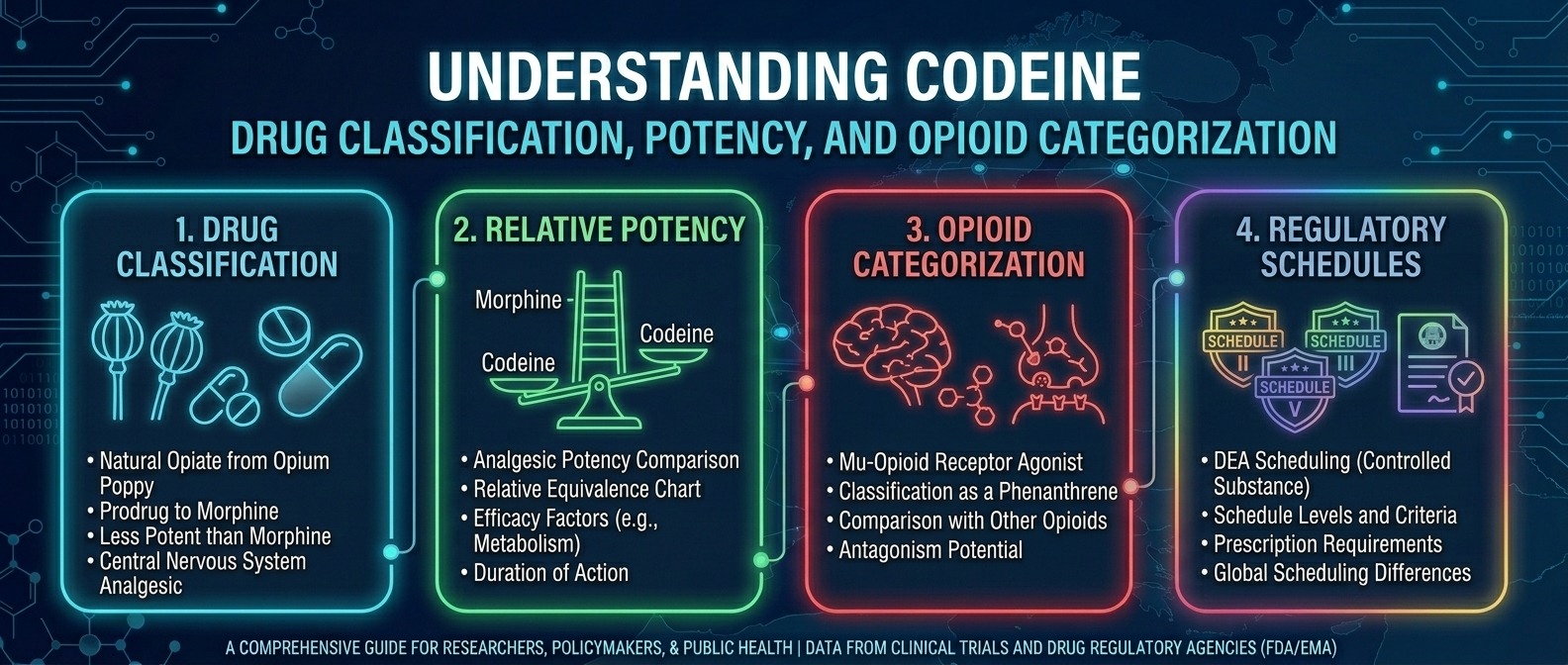
- Pharmacological Class: Opioid Analgesic / Opiate Alkaloid. Codeine binds to $\mu$-opioid receptors (mu-opioid receptors) in the brain and spinal cord. It acts as a prodrug; after administration, the liver enzyme CYP2D6 metabolizes approximately 10% of codeine into morphine, which produces its primary pain-relieving effects.
- Controlled Substance Schedule (US Criteria):
- Schedule II: Pure codeine single-entity products.
- Schedule III / Schedule V: Combination products containing codeine mixed with non-opioid analgesics (e.g., acetaminophen/paracetamol or ibuprofen) or cough syrups, depending on concentration.
2. Is Codeine a Strong or Weak Opioid?
Codeine is classified as a “weak” or “low-potency” opioid.
In medical practice and clinical guidelines (such as the World Health Organization Analgesic Ladder), codeine sits at Step 2 (Mild to Moderate Pain), whereas high-potency opioids sit at Step 3 (Severe Pain).
+-------------------------------------------------------------------------+
|                    OPIOID POTENCY SPECTRUM (MME)                        |
+-------------------------------------------------------------------------+
|  WEAK OPIOIDS            MEDIUM POTENCY             HIGH POTENCY         |
|  (0.1 - 0.2 MME)         (1.0 - 1.5 MME)            (4.0 - 100+ MME)     |
|  • Codeine               • Morphine (Baseline)      • Hydromorphone      |
|  • Tramadol              • Oxycodone                • Fentanyl           |
|                          • Hydrocodone              • Carfentanil        |
+-------------------------------------------------------------------------+
Key Potency Comparisons:
- Morphine Milligram Equivalent (MME): Codeine has an MME conversion factor of approximately 0.15. This means oral codeine is roughly 6 to 7 times weaker than oral morphine.
- Analgesic Ceiling Effect: Codeine exhibits a “ceiling effect,” meaning increasing the dosage beyond standard therapeutic limits (typically 240 mg/day) produces minimal additional pain relief while significantly increasing adverse side effects (e.g., severe constipation, nausea, sedation, and respiratory depression).
3. What Drugs Are Considered Opioids?
Opioids encompass all natural, semi-synthetic, and fully synthetic compounds that interact with opioid receptors in the human body. They are divided into four main categories:
| Category | Definition | Representative Drug Examples |
| Natural Opiates | Alkaloids directly extracted from the opium poppy plant. | Codeine, Morphine, Thebaine, Opium. |
| Semi-Synthetic Opioids | Synthesized in laboratories by modifying natural opiates. | Oxycodone, Hydrocodone, Hydromorphone, Heroin (Diamorphine), Buprenorphine. |
| Synthetic Opioids | Fully lab-created chemicals designed to bind opioid receptors. | Fentanyl, Methadone, Tramadol, Tapentadol, Nitazenes. |
| Endogenous Opioids | Naturally produced by the human body to manage pain/stress. | Endorphins, Enkephalins, Dynorphins. |
Summary Key Takeaways
- Opioid Identity: Codeine is an opioid analgesic and natural opiate alkaloid.
- Potency Profile: It is clinically categorized as a weak opioid, roughly 1/6th as potent as oral morphine.
- Metabolism Mechanism: Codeine functions as a prodrug converted into morphine by the hepatic CYP2D6 enzyme.
- Opioid Class Spectrum: Opioids include natural opiates (codeine, morphine), semi-synthetics (oxycodone, hydrocodone), and synthetics (fentanyl, methadone, tramadol).